
If you’re a Realtor, attorney, or homeowner working on a real estate transaction in 2026 or later, get ready — appraisal reports are getting a major facelift.
The long‑planned rollout of UAD 3.6 is changing how residential appraisal reports are written, reviewed, and delivered. Reports will be cleaner, more consistent, and packed with better data — but the transition may also slow timelines and challenge closing expectations.
What Is UAD 3.6 — and Why Does It Matter?
In short, UAD 3.6 is a new standardized appraisal report format developed by Fannie Mae and Freddie Mac. It replaces the old segmented forms (like those used for single-family, condos, multifamily) with one dynamic, data-rich URAR (Uniform Residential Appraisal Report).
Instead of open-ended narratives, appraisers will now use:
Structured dropdowns
Picklists for condition/quality
Standardized fields for location, site data, and more
Dynamic formatting based on property type
This change is meant to improve compliance, consistency, and clarity across all residential loan transactions — particularly those going through Fannie Mae/Freddie Mac-backed lenders.
The Upsides: Why UAD 3.6 Is (Ultimately) a Good Thing
✅ More organized & user-friendly
The new report will be easier to read and interpret — for lenders, underwriters, and even agents or attorneys reviewing a file.
✅ Better consistency
Standardized condition and quality ratings mean less subjectivity and fewer surprises between reports.
✅ Cleaner compliance
More structured data = fewer revision requests and a more credible report.
✅ Greater compatibility with modern tech
These new reports are designed for digital platforms, APIs, and automated underwriting — making the process faster (eventually).
The Tradeoffs: Why This May Slow Closings in 2026
While the new format improves long-term clarity, it also adds more work for appraisers:
More data fields to complete
More property detail required (lot/site info, condo project data, etc.)
More photos and condition-specific documentation
More technology (mobile data tools, digital measurement, data validation)
In Q1 and Q2 of 2026, many appraisers, lenders, and underwriters will still be learning and adjusting — so expect delays, communication hiccups, and a few growing pains.
What Realtors Need to Know
⏳ Set expectations early
Appraisals may take longer in early 2026 — factor that into your contracts and timelines.
📂 Be responsive to info requests
If your appraiser needs floor plans, HOA docs, or historical info — respond quickly. The more you can assist, the faster the process will go.
What Attorneys Need to Know
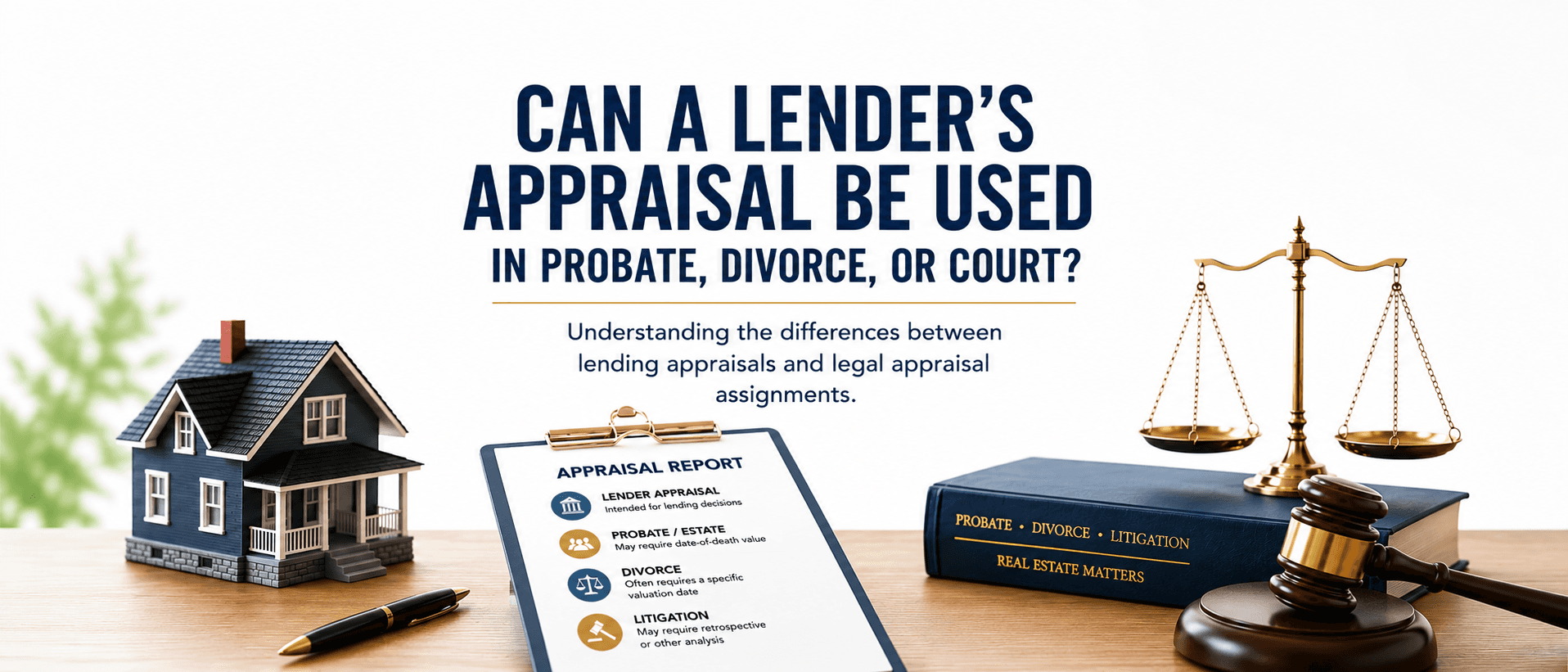
🚫 Don’t use UAD 3.6 reports for legal matters
The new UAD report is intended only for lender-based transactions. It is not appropriate for:
Estate valuation
Divorce proceedings
Tax-based appraisals
Retrospective valuations
Why? Because the intended use of this form doesn't align with legal standards — and its language won’t hold up in court or with the IRS.
If you’re an attorney ordering or reviewing an appraisal, always verify:
That the report is built for the correct intended use.
That the appraiser understands legal-specific assignment types.
That the format is appropriate for non-lending purposes.
What Homeowners Should Know
Whether you’re buying, selling, or refinancing:
You’ll likely receive a new, more detailed report.
You may be asked to provide additional information (lot size, upgrades, HOA docs, etc.).
Expect the process to take a little longer, especially in early 2026.
The report will be more technical — but also more transparent and easier to explain.
Working with an appraiser who can translate the data clearly is key.
Bonus: Industry Impact You Should Know About
Some appraisers may choose to retire or exit rather than adopt the new technology and reporting demands.
Those who stay will need to adopt mobile tools, digital inspection software, and new tech to meet the standard.
This could reduce the number of experienced appraisers in 2026 — which means choosing a qualified, up-to-date appraiser is more important than ever.
Final Thoughts
UAD 3.6 is a necessary upgrade to the appraisal process — more transparent, more defensible, and more compatible with modern real estate systems.
But like any big change, the transition won’t be seamless.
That’s why Authority Appraisals is already preparing for the shift — with training, tools, and processes to keep your closings on track.
👉 Need Help Navigating the New Appraisal Landscape?
Whether you’re a Realtor, homeowner, or attorney, we can help you understand what’s coming — and how to prepare for it.
📞 Contact Authority Appraisals
Let’s make sure you’re ready for the future of appraisal — starting today.