
Not All Appraisals Hold Up in Court
When a property value becomes part of a legal case, the quality of the appraisal matters more than most realize.
Not all appraisals are created with the same purpose—and not all of them will stand up under scrutiny.
For attorneys handling divorce, estate, or other litigation matters, relying on a weak or unsupported valuation can create unnecessary risk, delay resolution, or lead to challenges from opposing counsel.
Understanding what separates a defensible appraisal from a vulnerable one can make a meaningful difference in your case strategy.
Why Some Appraisals Don’t Hold Up
Most appraisal issues in legal settings come down to one core problem:
The report was not developed for a legal purpose.
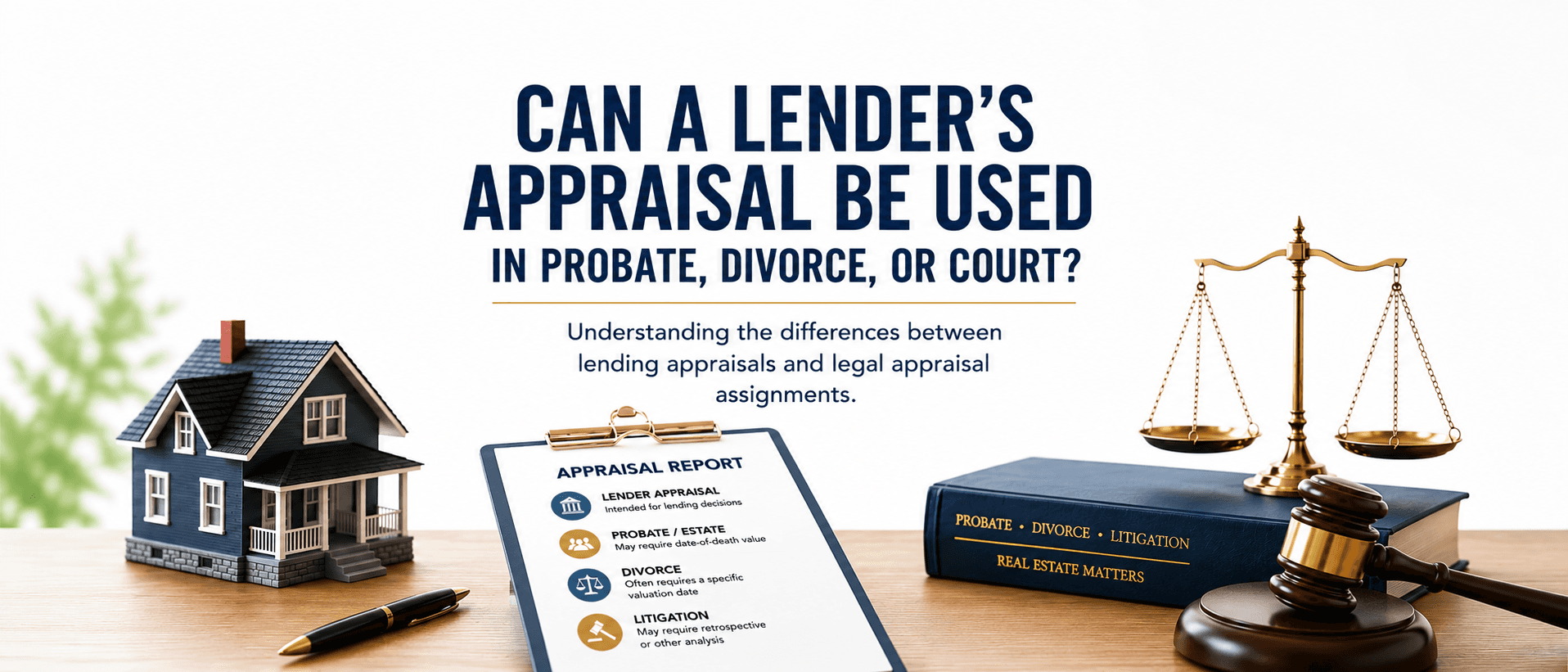
Many appraisals are completed for lending purposes, where the intended use, scope, and reporting standards differ from what may be required in a dispute or courtroom setting.
Common issues include:
Limited explanation of adjustments
Inadequate or poorly matched comparable sales
Lack of support for key assumptions
Reports that are not designed for scrutiny beyond underwriting
In a legal context, these gaps become points of challenge.
What Makes an Appraisal Defensible?
A defensible appraisal is one that can be clearly explained, supported, and justified—both in writing and, if necessary, in testimony.
Here are the key elements attorneys should look for:
1. Clear Intended Use and User
Every appraisal should clearly define:
Who the report is for
How it will be used
If the intended use doesn’t align with a legal or litigation setting, the report may not meet the necessary standard.
2. Appropriate Effective Date of Value
In many cases—especially divorce or estate matters—the value is tied to a specific date, not the current market.
Using the wrong effective date can significantly impact the outcome and credibility of the valuation.
3. Strong Comparable Sales Selection
Comparable sales should be:
Truly similar to the subject property
Relevant to the market conditions at the time
Clearly explained and supported
Weak or loosely related comps are one of the most common points of dispute.
4. Well-Supported Adjustments
Adjustments should not feel arbitrary.
A strong report will:
Explain why adjustments were made
Support them with market data when possible
Maintain consistency across comparables
5. Transparency and Explanation
A defensible appraisal doesn’t just present a number—it tells a clear story.
The reader should be able to follow:
How the value was developed
Why certain decisions were made
How the data supports the conclusion
Common Red Flags to Watch For
When reviewing an appraisal, these issues may signal vulnerability:
Minimal commentary or explanation
Over-reliance on a single comparable
Large adjustments without support
Inconsistent methodology
Reports clearly designed only for lending purposes
These don’t automatically invalidate a report—but they can create opportunities for challenge.
Why This Matters for Attorneys
In legal settings, an appraisal isn’t just a supporting document—it can become a central piece of evidence.
A well-supported valuation can:
Strengthen negotiation positions
Reduce disputes between parties
Hold up under opposing review
A weak one can do the opposite.
Taking the time to ensure the appraisal aligns with the needs of the case can help avoid unnecessary complications later.
Final Thoughts
Not all appraisals are interchangeable.
Understanding how a valuation was developed—and whether it can withstand scrutiny—can help you make more informed decisions when handling property-related matters.
Need clarity on a specific property?
If you need clarity on how a property should be valued for a specific case—or want to ensure an appraisal aligns with your intended use—we’re always available as a resource.
👉 Contact Authority Appraisals to discuss your situation